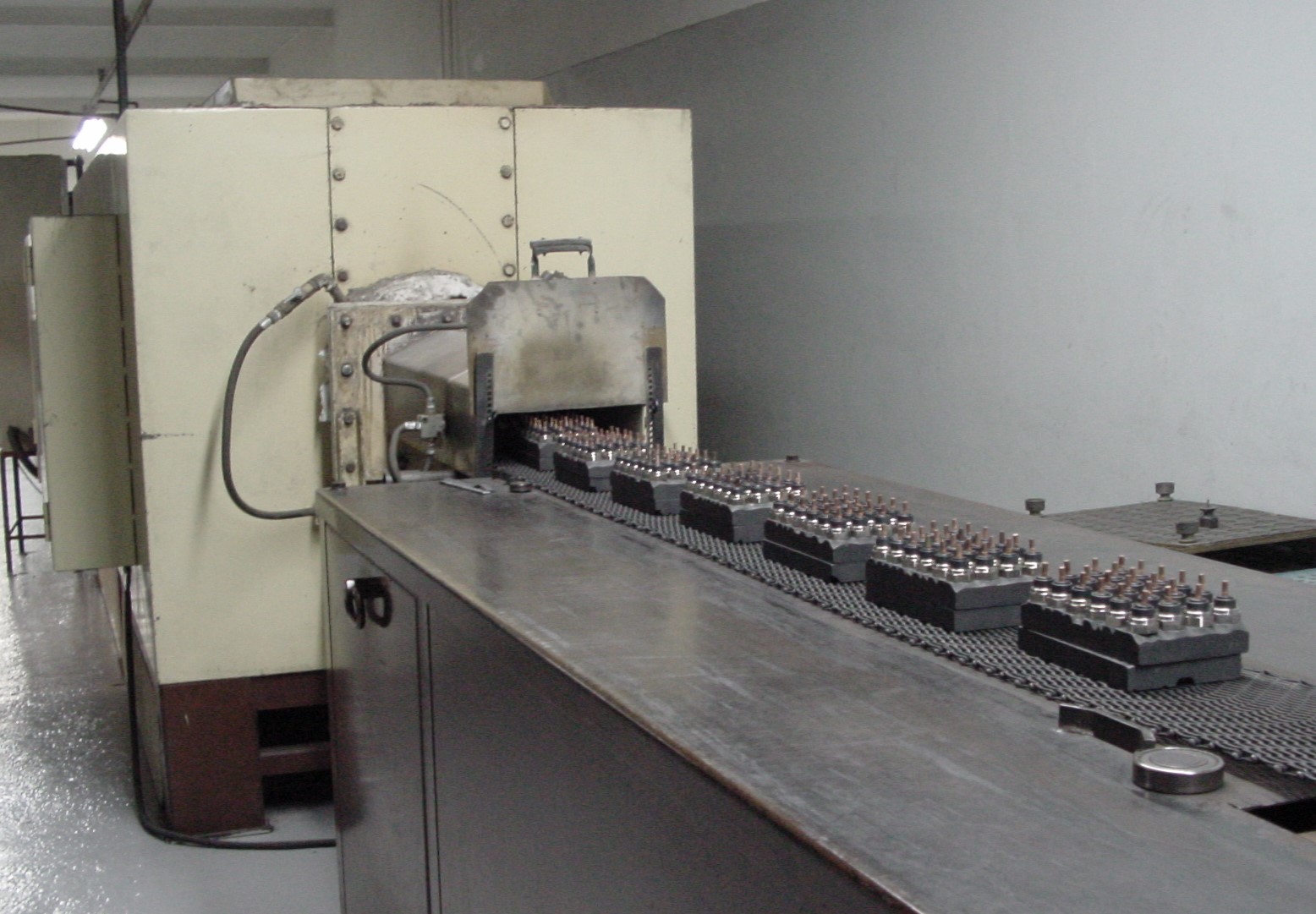
I love processes! Production processes explain much more than we can imagine …
A few years ago I started to worry a lot about food, I started this wave of reading all the labels of the products I would buy and researching what all those chemicals mentioned and codes described in the composition of the products were.
The most interesting part of this was the discovery that some of their manufacturing processes are part of our life.
Knowing chemical processes, once that in the semiconductor industry, chemistry is responsible for a large part of the devices production processes, I understood that depending on the chosen process to produce a device, different results could be obtained, as well as different residues (when there were).
As “Antoine Lavoisier” said, “in nature nothing is created, nothing is lost, everything is transformed”. In addition, depending on the choice of process, the transformation will give different results.
For this reason, and having done a lot of research in the field, I know that it is possible to obtain more effective and cheaper devices based on choice of used manufacturing processes.
An interesting part of dealing with processes is that we learn the repeatability of basic concepts of manufacturing processes in different types of industry, for example the blasting process. The concept of this process is used in the glass industry, foundries, dental protheses, electroplating, among others, but also in the semiconductor industry.
What differs here is the customization of the equipment according to our needs, or even the abrasion material.
For power semiconductor devices, one of the objectives of blasting is to bevel the chip’s edge, that should be between 15-60 0 and the surface roughness must be very well controlled.
The bevel angle is one of the elements responsible for the device’s reverse voltage. Roughness is also very important, as it can prevent the formation of localized traps that can compromise the operation of the component leading to localized failures.
Next, we usually clean the sandblasted surface by polishing it. This polishing process is a chemical solution, which allows removing small defects introduced during the sand blasting process.
At this point we have different chemical solutions that can be used, which may be alkaline or acid, more or less aggressive, which means, we have faster or slower etching solutions.
I found that based on the reverse recovery time of the device, that is, whether it is fast or standard, and the expected value of its reverse voltage, being high, medium or low voltage, the choice of the polishing solution does a difference in the results we get.
It shows here that the results are completely influenced by the choice of the processes used at each step of our production line.
But what exactly is behind the polishing process? Why does it matter which etching solution we use? How to choose the best one?
It is known that polishing is nothing more than etching, in this case chemical and moist, being a process whose rate of corrosion and the quality of the surface finish itself, is a function of surface defects, crystallographic orientation and electronegativity of the layer, solution temperature , solution stirring and concentrations of the chemicals used.
As I said, I love processes, and I believe that manufacturing processes are almost always the key to success of what we are looking for.
I’m here to invite you to discuss, to think about the processes in which we work with, in order to look for alternatives that can enable a completely different platform than the one we used so far. Couldn’t a problem be solved by choosing another process?
 Semiconductor Experience Sharing